Showing posts with label Fiction. Show all posts

Friday, January 31, 2014

Book review: Ajaya - Epic of the Kaurava clan Book1

Ajaya
The play dough of any creative writer in India, The Mahabharata is retold yet again from a villain's perspective in Ajaya - Epic of the Kaurava Clan. I was unswayed by the rebellious tone of the author, Anand Neelakantan's previous novel Asura. Hence, I approached this one with trepidation. The first 100 odd pages were gloomy as ever with only crows cawing, rain spattering during night, dust, stench and hunger taking precedence over any other word of imagery and descriptive details. It was a turn off for a person like me who can't take in pointless negativity in a book.

The novel revolves around 3 protagonists- the one at the supreme rung of social heirarchy; the crown prince of Hastinapura Suyodhana, the ill-fated low caste outcast Ekalavya and the casteless urchin Jara who follows Ekalavya everywhere like a dog. The crude inhuman reality of any society is brought about in the description of the lives of poor Ekalavya and Jara. The author has gone over the top to gain sympathy for such people. Since this task is overdone by him, the readers develop an initial disgust to such a writing style.

As the story proceeds, Suyodhana is shown in the light of a non-villain. I wouldn't say hero because he has not been portrayed as a person having revolutionary ideas and the courage to bring about a substantial change. He is a prince who doesn't believe in the rigid chaturvarna caste system that prevailed during his times and values merit and generosity above all other human virtues. While the Pandavas are shown as charlatans who would do anything to uphold the prevalent dharma (social order), Suyodhana is projected as a firm believer in establishing an egalitarian society. The book discourses views on an ideal society with the master strategist Krishna and his followers (Pandavas, Drona, Parashurama) on one side and the idealists such as Kripa, Balarama, Karna, Kauravas and Bhishma on the other side fighting for casteless, merit based societal norms.

The reader can't help but rejoice in the character of Suyodhana for he is everything that we imagine a modern political visionary should be. My heart went out to Suyodhana when a Pandava marries his first love, Subhadra. The atrocities of upper caste individuals(Drona, Kunti and her priest gang) against the politically weak (Suyodhana) individuals and lower caste heroes (Karna and Ekalavya) make one's blood boil. The reader in my mind was doing a full split cheering act when Karna won the coveted 'Dharmaveera' title based on sheer talent and merit. The flight of the nishada boy Ekalavya who is denied basic survival and respect in society makes you wonder whether the time of Mahabharata epic was really habited by God and god-men.

The picturing of low caste livelihood, their shanties and slums, untouchability, unequal opportunities to flourish in life really got me thinking about the fantasies of the epic of Mahabharata. After many millennia of its inception, we still base our moral decisions drawing on the wisdom of Mahabharata. This book drives home the common clichés that history is written by the victors, a hungry man is not a free man and others. I started questioning the deeds of many main characters of Bharata- the deeds which I took on their face value till now. 

Although this book has a dejected and dark beginning, the overall read leaves with a lot of questions in your head, the mark of a good book. Read this compelling book if you want to 

  • fathom the difficulties a commoner like Karna had to face to level upper caste Arjuna in his renowned skills.
  • mull over the intricacies of 'Dharma' that Pandavas so fondly fought for and in the process burnt half the country.
  • be challenged over what is right against what is humanity.
“There’s no path to liberation that doesn’t pass through the shadow.” 
Jay Michaelson

Our epics, fables and folk tales have age old wisdom. It is upto the wise people to not accept received rigid wisdom without questioning its moral fabric.


Sunday, October 20, 2013

Book review: The Mountain of Light

The Mountain of Light

“There are two motives for reading a book; one, that you enjoy it; the other, that you can boast about it.” 
-Bertrand Russel

Few reads just alter the way you look at something. I was driven into silence after I finished my latest read and was deeply engrossed in research. I read mounds of articles on the Punjab empire, it's treasure, it's ancestry - even the servants of Sikh royal ancestry have tales to tell. I am mesmerised now, knowing all too well that India is strewn with endless saga of affluence, influence, power, bloodshed and a talent that the world has never imagined to exist.

I thank Indu Sundaresan for sending me a pre-release copy of this captivating historical fiction. I took to reading this book with a lot of apprehension since I was unsure of whether this book would impress me. Having read Indu's previous triology on Taj story, I certainly thought her latest book wouldn't have anything new to offer me. But I am glad to be disproved this way because her signature style of using an enthralling imagery served it's purpose yet another time. I was transposed into pre-independent Indian times where aristocracy, diplomacy and invasion were at their best. History fed to me in such a delightful way is an always welcomed gesture. I am left with a hunger to know more, to imagine more and to relish more of the centuries old Indian tussle with a foreign power.

The beginning of the story is set against the backdrop of a lush Punjab empire in the western frontier of India. The larger-than-life ruler of Punjab empire, Ranjit Singh is hosting another king in exile- Shah Shuja. This deposed Afghan ruler has been kept under protection (read house arrest) in the beautiful Shalimar Gardens with a promise of all the help to regain his kingdom. But the Punjab's lion only bargain in exchange of his support is to get the possession of Kohinoor diamond from Shah's wife Wafa Begum. What follows in the narration is how the diamond changes hands from Wafa Begum to Ranjit Singh, how East India Company lays a greedy eye on it and eventually how the world's biggest diamond is secreted out of India on a voyage to land in the crown of Queen Victoria of England.

The narration comes through different characters and with an extended timeline shrunken into a mere 300 odd pages. Naturally the reader finds herself relishing in the perspectives of different characters. There is the lordliness of a generous king of a mighty empire, unadulterated admiration of a general towards his master, shrewdness of a woman under veil, amusement of an outsider finding home in a land that couldn't be more foreign to him, the innocence of a little boy who looses his priceless empire and all the power that comes along with it to a foreign hand only to find himself living off the scrap of a salary from the same hand.

Only at the end of the novel did I realise how much I wanted it to end in a different way, how I wanted the young Maharajah to have been a little older to truly understand what was at stake in his life, how I wanted a piece of India to be independent for a little longer than it did in actuality. The last chapter 'Diary of a Maharajah' was heart wrenching for me as I had to read along Dalip Singh's bewilderment in a foreign land. This young prince was uprooted from his homeland and Anglicised in every possible way before being taken to London to be presented in front of the Queen mother. My heart went out to this child who was a puppet king from the age of 5 under British, removed from the care of his mother into an English couple's guardianship, christened even before he was 15 (though he converted back to his birth religion of Sikhism at the latter part of his life) and visited his homeland as a foreigner only twice under the controlled-watchful eyes of Britishers.

The characters take over the show in this novel of Indu's. Although there are quite a lot of main characters in the narration, a reader will be able to associate with them all. There are haughty mighty rulers of lands, demure and enigmatic Indian women of power, unsympathetic East India Company officials while many other Englishmen who blended with the rich fabric of Indian culture and called India their home, English maidens with a longing for love and companionship et al. One character particularly stood out to me which is that of a faithful son of the soil who gave up his life to stop Kohinoor from adorning another lord. This character is greatly inconsequential in comparison to others involved in the mayhem of Kohinoor transport but yet the subtlety with which the author has painted this character makes one's heart melt.

A good read to me is the one that sets me up for many more reads and I dare say I indulged myself in Punjab Empire and a bit of East India Company history. This book revels in the mellowness of Indian culture, diplomacy of a falling kingdom and the ruthlessness of a conqueror. On a parting note I want to uphold one dismal fact of Indian history that it was made mostly by men. I recommend this book to all historical fiction lovers and especially to those who bask in fiction with good imagery.

“A great book should leave you with many experiences, and slightly exhausted at the end. You live several lives while reading.” 
― William Styron


Sunday, August 11, 2013

Book review: Charlie and the Chocolate Factory

“I like nonsense, it wakes up the brain cells. Fantasy is a necessary ingredient in living.” 
― Dr. Seuss


How would you feel when the vocabulary book, say Power of Words made easy (name changed) had a lot of cartoon illustrations and rhythmic poems to teach you those big, elusive words? Learning of so many graduates for GRE, CAT and various other exams would have been so much easier! I see 'Charlie and the Chocolate Factory' in the same light for kids.

This one is a delight to read, so rhythmic and breezy. There is a poor honest boy called Charlie who lives with his parents along with 2 sets of grandparents in a dilapidated house. A world famous mysterious chocolate factory exists in his home town about which he has heard a ton of stories from Grandpa Joe. Charlie luckily comes in possession of one of the four golden tickets for a visit to the factory. The factory's owner Mr. Willy Wonka becomes the host to show Charlie and three other winners his proud factory. What follows in the story is how each of those other 3 kids (a glutton, a spoilt brat and a TV maniac) get thrown out of the factory even before the complete tour is done.

This book stretches kids' imagination by pushing the brain to imagine tens of incredible mechanisms in a factory and delights the readers through a lenient dash of poetry throughout the story. The characters in the book are eccentric stereotypes of the world and kids will get to know a hell lot of describing words. The imagery in the book is just what kids would enjoy. Since the book is all about chocolates, the kids will have one problem reading this book - they can never put it down!!

I recommend this book to all adults who are interested in reading literature with word play and rich imagery. I am sure even adults' vocabulary would be enriched after this reading experience. This book is typically for kids of age 8-12 with appropriate grade level hold on English.

Wednesday, February 20, 2013

Book review: The Shadow Princess

Shadow Princess
Some time back I wrote about the first two books in The Taj Trilogy by Indu Sundaresan: The Twentieth Wife and The Feast of Roses. Shadow Princess is the culmination of the saga. Indu portrays the story of Mughal India after the death of it's beloved begum, Mumtaz Mahal a.k.a Arjumand Banu.

The narration starts with the fourteenth child delivery by Arjumand Banu and her death during the process. She deserts this world leaving behind two daughters, Jahanara and Roshanara along with four sons. On the death of her mother, Jahanara becomes the Padshah begum sahiba of the imperial harem leaving behind Shah Jahan's other two wives in the run for the title. In the time of his beloved wife's death, emperor Shah Jahan depends dearly on his daughter for emotional support and matters of governance. Jahanara looks after her father and kingdom so well that the emperor grows extremely attached to his eldest child and refuses to give her away in marriage to anybody. Jahanara thus looses the chance to marry her love interest, a capable noble in her father's kingdom - Nazabat Khan. Thus sets the mood of longing and desperation in the book.

Jahanara supports her father's will in establishing Dara Shikoh on the throne of Hindustan while her sister Roshanara whose importance is whittled away in Jahanara's brilliance supports another brother Aurangzeb's accession to throne. The haughty pious prince, Aurangzeb longs and fails to attain his sister's Jahanara's affection. Jahanara on failing to receive the natural right to marry, took to immoral and unconventional ways of seeking love. She starts to smuggle in a man into the imperial harem to satisfy her. On discovering that Nazabat too loves her, she meets him secretly under the very nose of the emperor. Aurangzeb's struggle for gaining power is paralleled with his sister's attempts at gaining love. The book entails to describe the construction of Taj Mahal in painful details and there is an information overload.

While this third and last edition in the trilogy holds strong in expressing the author's brilliance in narration, it lacks in holding the readers's interest. Primarily the protagonist of the book, Jahanara Begum is not as impressive and authoritative as the protagonist of two other books, Mehrunnisa. Although the character building has come out substantially, the character in itself lacks any charisma. Secondly, the detail with which the author has described the construction of Taj Mahal is unappealing to a reader lacking architectural background. The story is a drag with nothing new to offer and the important historical incidents in the life of Aurangzeb have received lesser importance than they were actually entitled to. The perfidy and fratricide on Aurangzeb's part is chalked out much too feebly and the grandeur of Mughal rule is all repetitive.

All in all the climax of this trilogy is a disappointment and to be read only for curiosity. I read the book in sections-once starting from the last few chapters, once in the middle section, skipping many a few pages out of sheer boredom!! At last I finished the book and here I am recommending this to only those who have read the first two wonderful books in this trilogy.

Sunday, February 3, 2013

Victory of a simple dream

The fine lines around my aging eyes were more pronounced when we laughed the same careless laughter we did a decade ago. When my best friend was next to me, it didn't matter how silly I sounded. My heart was at peace with the serene knowledge that I was at Mysore viewing those palace lanes I longed to walk as a child. The splatter of rain drops complimented the typical neighing laughter of my best buddy. As she animatedly narrated the recent takeover of by her company I couldn't help but admire her journey to this day. I was startled to look at the confident woman sitting next to me who once crumpled down with tension not able to bear the career path she was in.

She dragged me with all might towards her stall in the world famous Dasara exhibition. She couldn't contain her excitement when she wanted me to choose from the intricate, embroidered accessories she owned. I could only marvel at her designs with muted appreciation. Words deserted me when I realized how famous her accessories brand had come to be. Is this the same silly girl who believed circuits and labs were her destiny until one fine day she froze to bed in the morning not able to carry herself into the office? It took her mighty 5 years post-graduation to realize what she truly desired and another 5 years to put together the business she so desperately worked to build strongly. Today people see her business, nay art as an effortless enterprise built over night. But only a couple of us really know what conviction she displayed and what hard work she put in to make her life count. When she was shouting instructions to the buyers to not rush around the counter, the flashes of colors in the beautiful earring I held unknowingly  took me to our graduation days.

Wasn't my bestie the one to come up with the most visually pleasing presentation for an assignment in the environmental subject? This geek who aced every test in our class, built an entire set of costumes, masks and posters for a dance show in our second year. How did I encourage her to indulge more in her artistic activities only to be put down by her lack of interest! Wasn't she stitching all her clothes herself and complimented them with her simple yet innovative embroidery? How did she even think that a life of electronic engineer with it's loss of colors and art, can render a satisfactory career for her interests? She graduated holding a 5th rank in the university and went on to fulfill her dull self imposed work life of an engineer. Even when the boredom in her job gnawed on her happiness from within, she didn't retire to introspect on her deepest desires. To compensate for the missing excitement in her job, she augmented her educational qualification with a post graduation degree in the dreaded electronics field of 'Signals and Systems' because as the conformist society expects that is what intelligent people choose to do. Her inner energy was not wasted in going against the current but letting herself carried away with the current. Loss of the pleasure that arises from creating beauty, pushed her to give away all that she built by 9 years of education and working.

The pride I felt when she decided to quit her current career for something that came natural to her was overwhelming. She started by creating simple designs on her computer (the by-product of her tryst with IT industry was the knowledge of presentation and graphical tools) and gave life to them on the clothes. She opened a boutique with the savings she had and quickly started owning a strong foothold in the local fashion market. Her simplistic designs won her many loyal customers and soon she started designing ethnic clothes for the local fashion events and along came money, recognition and a structured organisation with buzzing employees and clients. In 5 years of her business she has expanded from her 20*30 sq.ft boutique to a three storeyed stitching factory and a lavish boutique in the heart of the city. Recently she acquired an informal family business in a village near Mandya that produces rare accessories made of richly embroidered clothes. She gave industrial touch to the age old techniques and now produces fashion of high demand in the cities. She has taken the women of destitute homes and orphans under her wings and trained them in many of the new designs she has come up with. Today she is responsible for the sustained income of 2500+ underprivileged souls in the Mysore city. Recognizing her growing fame and talent, the Department of Art and Culture of the Karnataka government has paired up with her to revive the lost embroidery skills of the village life around Mysore district.

Speak to her of the further business plans, she lights up with a tinkle in her eyes and gushes out the details of  jewellery design course she has undertaken and how she plans to bring out her own series of gold jewellery designs. The rut and morose life she was leading as a high paid electronics engineer are replaced by the joy of creation and helping people. When once she was tired and irritated by the slightest change in her routine, now she literally jumps at the prospect of doing something new each day, every day. She lights the heart of many people around her with a simple laughter and ample love. She delights by leading a life she is proud of.

Our dream, the desire that is in our soul, did not come out of nowhere. 
Someone placed it there for a reason.
Paulo Coelho 

Monday, January 21, 2013

Book review: The Feast of Roses

The Feast of Roses
I wrote about an enticing narration of Mughal story here, about the book 'The Twentieth Wife'. The tale goes on with the sequel as 'The Feast of roses' by Indu Sundaresan. While 'The Twentieth Wife' captures journey of Mehrunnisa into emperor Jahangir's heart and eventually into his harem (living quarters reserved for wives and concubines and female relatives in a muslim household), Indu's second book is Mehrunnisa's rule over Hindustan as Padshah Begum (the supreme empress) second only to the emperor himself. 

Mehrunnisa is conferred upon the title of 'Nur Jahan- Light of the world' by Jahangir after their wedding, a well deserved one for she was the most beautiful woman in Mughal empire at that time and by the virtue of her marriage and her husband's love, the most powerful Mughal woman of her time. The ambitious woman is not contended with a mere title but wishes for true power over the harem and also in the Mughal court. Although she was Jahangir's twentieth wife, Mehrunnisa was the most beloved of all and she establishes this fact by snatching away the position of 'Padshah Begum' from Jahangir's other wife - Jagat Gosini, mother of prince Khurram (later ruled as Shah Jahan). Mehrunnisa had to face the wrath of important amirs (nobels) at the court and women at the harem for she was the emperor's sole partner in ruling the kingdom and others had very less left to participate in. 

Mehrunnisa forms a junta involving her father Ghias Beg, her brother Abul Hasan and prince Khurram to assist her in taking important decisions for state. From being a mere twentieth wife, Mehrunnisa enamors the emperor to such an extent that he crossed many royal etiquettes of Muslim world to accommodate the desires of his beloved wife and lover. Jahangir lets a royal woman's presence at the court (even when veiled, imperial women were forbidden to appear before other men), prints coins in name of 'Nur Jahan', consults her in all matters of statesmanship and breathes every breath in her presence. Prince Khurram is married to Mehrunnisa's niece Arjumand Banu (known to the world as Mumtaj Mahal) and Mehrunnisa's futile efforts to marry her own daughter Ladli to Khurram crushes her daughter's dreams miserably and becomes one of the reasons to cause a rift between the prince and the empress. Mehrunnisa then marries her daughter to Prince Shahryar and plots to place this weakling on the throne of Hindustan. What follows is a bloody rebellion from Khurram and the causal ouster of him and his wife from the empire. This woman who rules the empire for 16 long years is finally sent to Lahore in official exile on Jahangir's death when Shah Jahan becomes the emperor after slaughtering all his brothers and cousins who were contenders for the throne. 

Indu has painted the politics of Mughal court in lush words and emotions befitting a veteran writer. Indu's books provide a sensory treat of the historical events. The pure love between the emperor and Mehrunnisa is a wonder to know about. Jahangir keeps going back to Mehrunnisa in spite of his access to any woman in the world which speaks volumes about their love. His love is unflinching even when Mehrunnisa slaps him and they both fight like commoners in front of slaves and eunuchs. The power struggle between Mehrunissa and prince Khurram is worth every minute of reading. The affluence of Mughal empire brims through every page of narration and there is also description of the flight of an English ambassador to the Mughal court, Thomas Roe. The grandeur of a bygone era is there to relish all over the pages of this book. 

Reading this book has made me well versed with the history of the most powerful dynasty to rule over India. I will never forget the lineage of Moghul rulers, their architecture, their way of life, socio-political values prevalent over the 16th and 17th century India and the magnitude of Indian soil richness. This book is dear to me for another reason - it's strong and mesmerizing prose. Many a times I have forgotten whether I am reading a prose or a poem. The lull of a bedchamber, the tenderness of a girl's waiting for the lover, the manhood of a prince in the battlefield, the madness of love for a wife, the imperial power of a monarch, the arrogance of affluence, the subjugation of a kingdom's subjects - all these find new life in Indu's words. If this book is of any value apart from the history it depicts, then it is the bewitching use of words in prose. 

In comparison to the first book of any trilogy, the second one is always considered a drag but sparing a few repetitions of facts much needed for a strong narration, 'The Feast of Roses' is a historical and imaginative delight for the reader. I recommend this book to whoever is interested in knowing about
  • the history of Moghul India in the disguise of a story
  • the love story of one of the most powerful couples in the pages of Indian history
  • the rise of a mere woman to the level of a Muslim monarch
Enjoy the beautiful prose by buying yourself a copy:


Thursday, January 10, 2013

Ode of abstract!!

He handed me the headphones. The sound was high-pitched, like the soundtrack of a movie in which random scenes had been strung together, or cut up and played backwards, or deliberately placed out of order. Bottles clinked and a door creaked open. A shot rang out. A child whispered, Is he here? Where is he? A women wept and said, Nahi, nahi. There was the sound of water falling from a great height. A door creaked shut and a bottle smashed on a tiled floor. A woman's high voice fell deeply through the octaves and a shot rang out. A man panted like a dog. A child wept and water lapped against the side of a boat or a body. A bottle of champagne popped and a doorbell rang. James Bond guitars played against cowboy string orchestration. The child said, Here he is. Where is here? The woman's voice, soaked in reverb and whisky, executed another perfect fall and I experienced a sudden drop in my head like a vertigo rush. I heard the sound of water and heard a man shout, Monica, my darling, and I felt so dizzy that I had to close my eyes. Then a woman said, Is he here? and a child whispered, Nahi, and a shot rang out and everything went silent.

- Jeet Thayil 


The aforementioned paragraph is the most abstract description I have read of a song till now. The writer challenges my thinking with every line. How I am enjoying reading his book Narcopolis a Man Booker Prize nomination!

Monday, November 26, 2012

Book review: The Twentieth Wife

Since five days a princess, no a seductress, no an empress has absorbed my thoughts. Images of her alluring the emperor of Hindustan have constantly run through my mind. I am rejoicing my new found love for Urdu. I am speculating the riches of a bygone era, of a great ruler Hindustan ever witnessed and of the customs pervasive throughout the medieval ages of our Hindustan. Flashes of imperial gardens, traditions and royal mannerisms are distracting me ceaselessly. I want to know more, imagine more and be lost terribly in the world of imagination I swayed through for five days now. The book The Twentieth Wife by Indu Sundaresan has been more like a motion picture for me.

The novel begins with the depiction of a famished and penniless Persian family in a caravan, when the lady of the family gives birth to her fourth child Mehrunnisa, meaning the 'sun among women'. Birth of Mehrunnisa brings uncanny twist to the fate of her father Mirza Ghias Beg who is blessed with good fortune of being a nobleman in auspicious court of the Mughal emperor Akbar. Mehrunnisa is brought up in the affluence of court blessings and at the age of eight she witnesses prince Salim's wedding and eyeing his charm and beauty for the first time then, Mehrunnisa decides that she would one day become a wife of Salim and thereafter the empress of Hindustan. Akbar's principal wife, Padshah Ruqayya Begum takes special interest in this inquisitive child and lets Mehrunnisa attend to her in the zenana or the royal harem (living quarters reserved for wives and concubines and female relatives in a Muslim household). The Persian beauty Mehrunnisa grows into a young lady in the atmosphere of imperial harem absorbing the culture, gossips, politics and practices of the powerful women behind the veil. Mehrunnisa grows old to be still obsessed with marrying prince Salim.

In tandem, stories of Mughal politics are woven into the story with much convenience of an adept storyteller. Indu Sundaresan has mingled historical facts of power play into the backdrop. Much detailing is given to the bloodshed conspiracy of prince Salim trying to snatch away the throne from his father. Cruelty, politics and statesmanship find improved standards of description in the novel. Indu takes the readers through milieus of political turmoil during the last decade of Great Akbar's life. When Mehrunissa's love interest Salim is busy with conspiring against his father, Mehrunissa is able to make Salim notice her and long for her companionship. Much to her dismay, emperor Akbar unaware of the budding romance commands Mehrunissa's hand in marriage to a brave soldier of his kingdom, Ali Quli. Mehrunissa enters into a matrimony devoid of love and respect, for this learned lady doesn't find a capable partner in a mere soldier. A period of childless marriage and a decade long separation from Salim bring in a lot of changes in Mehrunissa's life and also in the rule of Hindustan. Akbar dies away giving the throne to his rightful heir, Prince Salim who then transforms into Nuruddin Muhammad Jahangir Padshah Ghazi.

Several obstacles face Mehrunissa and emperor Jahangir's union. A girl child from Ali Quli, Jahangir's son Khusrau's rebellion for throne, politics of emperor's cohorts and his empress Jagat Gosini, Mehrunissa's Islamic duty as a wife to her husband all come in the way of Mehrunissa achieving the marital status with Jahangir. How Jahangir thwarts his son's attempt at dethroning him, how the emperor as well as Mehrunissa remember each other, how the emperor's new rule thrives in Hindustan, how Ali Quli gets out of the scene for Mehrunissa to unite with the emperor, does Mehrunissa's desire to become an empress get fulfilled- all these questions make reasons for a thrilling read. How Mehrunissa turns into Nur Jahan to rule the vast Indian empire is a story worth reading. The delicate weaving of history into fiction is spellbinding.

Though her debut novel, the author Indu Sundaresan has achieved the veteran talent of picturing landscapes through her words. The blossoming spring and the scorching summer get new freshness in Indu's descriptions. The colours and odours of the imperial harem all get new charm through the author's narration. It is a treat for the brain to get flown into the world of Mughals which Indu paints before us. There is never a scene which is described dully and provided lesser importance. Be it the erotic sensual acts in the harem or the bravado in battlefield, every emotion is worth involving with. Through the end of the novel I found myself holding onto my breath to know whether Mehrunissa accepts emperor's woes and what happens to the throne that is always feeble under successors' plots.

I strongly recommend this book to those who have an interest in knowing history, in getting a peek into Mughal durbars and harems. This book written with a non-Islamic perspective shows what the mannerisms of Agra court meant to an outsider. If you are wondering what influence veiled Muslim ladies had on their emperors, this is the right book for you. Do cultures of a bygone era, another religion and another outlook excite you? Then indulge in this fictional read of 375 pages. If you want to enjoy the delicacy of Urdu words thrown in casually into the story then this is the fiction for you.

I parted with the book with a comfortable feeling that I stay in times where women either Hindu or Muslim do not have to solely depend on their men to provide food and dignity in society.

This book is a part of the Taj Trilogy. The other two books are ‘The Feast of Roses’ and ‘Shadow Princess’. It is the first in the series. 


Tuesday, October 16, 2012

Book review: The Krishna Key

The Krishna Key
When I finished reading Chanakya's Chant I couldn't wait to pick up Ashwin Sanghi's next thriller "The Krishna Key". I quickly skimmed through few reviews to get an idea as to what the book had to offer me. And soon enough I excitedly finished reading this 450+ pages thriller/lecture.

Like Ashwin's trademark narrative style, the plot in Krishna Key also alternates between present and a bygone era which is Mahabharatha. A fanatic serial killer who believes himself to be the tenth incarnation of Lord Vishnu is pretty much responsible for many murders. The protagonist of the novel, Ravi Mohan Saini a history professor is unwillingly pulled into the center stage of the mystery when he is held responsible for his friend's murder. The dead friend has left behind 4 Indus valley civilization seals and the story revolves around finding all of those seals and deciphering their cryptic meanings. The reader is in for a ride through various historical and mythological secrets.

The book was much hyped and critics branded Ashwin as the "Dan Brown" of India, a rather well deserving one. The amount of research gone into the book is truly applaudable. When there is a dearth of Indian authors weaving stories around the vast expanse of Indian mythology, Ashwin Sanghi is a welcomed change. The historical revelations are pleasantly exciting and the scientific angle to mythology is above mediocre. Few spoilers from the novel:

  • Did ancient India knew nuclear technology?
  • What do you have to say about the uncanny similarity between apex of the Taj Mahal dome and the shape of hindu Kalash, mango leaves and the inverted lotus?
  • Was Indus valley civilization period any different from that of Mahabharata?
  • The analysis of shapes of OM, Swastik, the Islamic sacred number 786
  • Similarities between Zoroastrian gods and Hindu gods
While the rich load of amazing facts are the highlight of this novel, the plot and narration die a slow death of sloppiness. The hero (if you want to call him that) is shown true to his profession in that he lectures all the time. There are no conversations per se, but only a question and lecture format followed throughout the narration. The hero is a know-it-all Robert Langdon spoof and the other characters also seem to fall prey to this lecture-giving norm. The characters change their basic nature too soon without any genuine provocation to do so- sidekicks turn into villains, villain turns into a dumb student, metal hard hearts melt down into love deprived souls. God forbid there is also a love story popping out of nothingness at the end. Well to sum it up the author has tried too hard to present readers with awe inspiring research and has sidetracked what is important in a thriller - a good narration. 

I agree it seems surreal that a mafia don speaks of history with the authority of a scholar but this book has far better things to offer in terms of scientific interpretation of history. One has to bear the pain of a boggy narration to reap benefits of a classic Indian thriller. Hats off to the research done by Ashwin Sanghi. I prescribe this book to one and all.

P.S: My next read involves going through all the blogs, websites and books referred by Ashwin Sanghi for his work on Krishna Key.

Wednesday, September 26, 2012

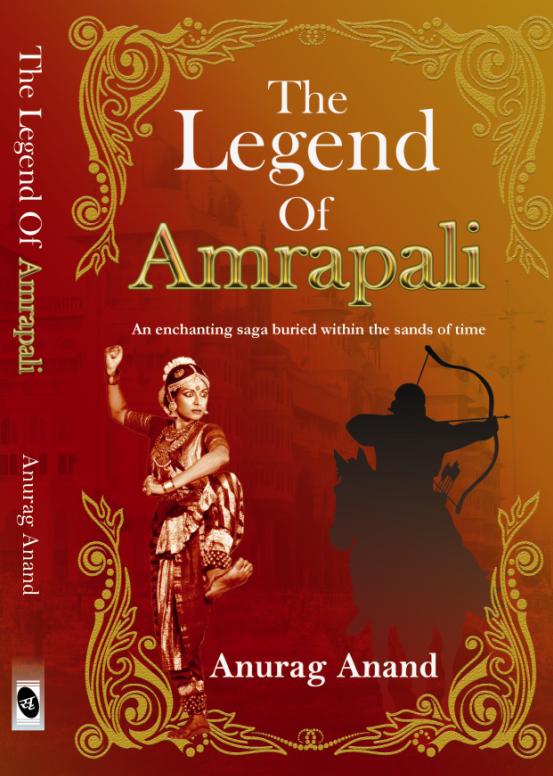
Book Review: The Legend Of Amrapali


Throw in a confederacy of kingdoms with a selfish king who places his personal political success ahead of the welfare of his people and add a demure, learned, skillful dancer yet a valiant political influencer - voila you have yourself a commercial bollywood historical movie. Only here the difference is that Anurag Anand has used the formula to create a historical fiction novel centered around the well known city bride Amrapali who was a contemporary of Lord Buddha. I had two reasons to pick up this book for reading:
1. During the book launch Shashi Tharoor claimed that this book is in the likes of Shiva Trilogy and Chanakya's chant.
2. My favourite danseuse and columnist Mallika Sarabhai gracefully adorns the cover page of the book.

The book was nowhere near the expectations I had from it. It had grip over the story only at few places and loosely woven around the rest of the plot. The writer looses finesse when it comes to build the thriller and anticipatory angle of the narration. I am a kind of reader who likes almost whatever she reads. This book failed to impress me either in the plot or narration or the language. The plot is too predictable, the twists are expected and the language is laden with grammatical and spelling mistakes (which in the foreword, the author attributes to not listening to his wife). Having read both the Shiva Trilogy and Chanakya's, I can dare say Mr.Tharoor falsely claimed that Legend of Amrapali is on par with the brilliance of the other two books. 


The story begins with the escape of a young man Pushkumar, from the royal prison and proceeds to take the readers to a flashback of almost 18 years. Amrapali was found under a mango tree in Vaishali by a couple who lovingly raise her with care and affection. Being a doting father, Somdutt makes sure his daughter Amrapali gets education from a rajguru Narhari. She learns all forms of vidyas including kootnitti, rannnitti along with various other feminine art. Amrapali becomes an expert in dance and entices every soul in Vaishali. She starts falling in love with her childhood friend Pushpkumar oblivious to the fact that Manudeva, the lustful king of Vaishali is plotting a deadly plan to get her at any cost. How fate deceives Amrapali by separating her from Pushp, how all her loved ones fall prey to the cruelty of Manudeva, how she becomes a nagarvadhu and finally how this divine beauty becomes successful in spear heading the smartest political coup of Vajji confederacy is the rest of the story. Without a strong explanation by the author, readers are left to wonder how a nagarvadhu can shake the stability of the highest democracy of her times.


Whatever the loose ends of his narration, Anurag Anand has succeeded in giving a wonderful picture of Amrapali's character. She is the innocent child, embodiment of celestial beauty, richest in purity of heart, undisputed queen of dancing, a tender lover,a sensual nagaravadhu, a vengeful politician, a magnanimous social worker, a great friend, and many more. One cannot help feeling a liking towards the central character of the plot.  The narration is also interspersed with few beautiful quotes such as this one: "The ache of losing someone or something when you are so close to making it your own that you can reach out and touch it, is far overbearing than that of losing something you always had or contrastingly had never dreamt of having."


This book is a breezy read and it takes a maximum of 3 hours to get it over with. I suggest the book to only those who do not take their reading seriously or who want to read a book just to get a topic for discussion over coffee table. It is not to be read by those who are looking for an intellectually appeasing work with great plot, gripping narration, good language and something to carry back to life. 


Sunday, September 23, 2012

Book review: Memoirs of a geisha


“He was like a song I'd heard once in fragments but had been singing in my mind ever since.”


Having read such a romantically intense quote one would expect this book  to be a deep love story. The book is all but a love story. The highest honor and happiness the protagonist Nitta Sayuri receives is to be the mistress of a man she loved. To quote Sayuri "You cannot say to the sun, "More sun." Or to the rain, "Less rain." To a man, geisha can only be half a wife. We are the wives of nightfall. And yet, to learn kindness after so much unkindness, to understand that a little girl with more courage than she knew, would find her prayers were answered, can that not be called happiness? After all these are not the memoirs of an empress, nor of a queen. These are memoirs of another kind." These are memoirs of a geisha.


The 448 pages of emotional upheaval is a narration of her past life from the protagonist Nitta Sayuri. The mood of the book is not melancholy but hopeful. Readers are introduced to Sakamoto Chiyo in her impoverished childhood in a small fishing town of Japan. After her mother's deathbed, much to little Chiyo's shock, she as well as her sister is sold off to a stranger by her father. Little Chiyo's scary journey to become a Geisha thereafter hold's the reader's breath. A geisha is not a prostitute but an artist in her own way.The most literal translation of geisha into English would be "performing artist". While Japan's tradition expected women to be confined only to the walls of her kitchen, geisha were the women who accompanied men in social gatherings and entertained them with their dance, music and games. It was traditional in the past for established geisha to take a danna, or patron. A danna was typically a wealthy man, sometimes married, who had the means to support the very large expenses related to a geisha's traditional training and other costs. The geisha who worked within pleasure quarters were essentially imprisoned and strictly forbidden to sell sex in order to protect the business of the okiya (traditional geisha house).


Chiyo much desired for her loving face with the tender and piercing blue green eyes, missed her chance of getting art training to become a geisha when she bears the angst of mistress of okiya while fruitlessly trying to escape. On a chance meeting with a man she calls chairman throughout, young Chiyo's life is changed forever. She is awarded the generous apprenticeship with a magnanimous tutor Mameha and learns dance, singing and many other art forms as a Maiko (a geisha in training). Rechristened as Sayuri she is made to sell her virginity to the highest bid of 15000 yen. 

On her journey to becoming the most successful Geisha in the pleasure town of Gion, Sayuri earns a lot of friends and also a ruthless enemy Harsumomo. Every step she takes after that meeting with chairman is to get closer to him. But fate holds other plans for her. Chairman expects her to reserve her attention and care to Nobu, chairman's friend. The world war 2 pushes Japan into a fearful state and leaves Sayuri to sweat it out hard in a Kimono maker's home. After 2 years of gruesome work, Sayuri comes back home only to see her it having lost all the grandeur and to witness geisha culture severely challenged among American soldier troops. How Sayuri brings back the traditional standards of a geisha, how she keeps alive the geisha manners among lustful American soldiers and how she ever gets closer to chairman is best appreciated when one reads the book himself/herself.


Arthur Golden, the author has entwined the delicate controversial story of a geisha in powerful words. A reader is not disgusted when she reads that Sayuri's mizuage (virginity loss) is sold; instead one cannot help but pray that Sayuri gets the highest bid so that she can repay the amount to okiya for which she was sold and liberate herself to become independent geisha. The author compels you to shed tears when Sayuri finally gets her first kiss from chairman. Though the form of narration is prose I felt it is no lesser than a wonderful poem. Sayuri is pictured as a strong woman fighting against many odds; yet she is that delicate vulnerable girl whom anybody would love to protect. At once Sayuri looks like she is the unfortunate girl who deserves better, but the very next moment she is a happy soul to get the best out of her world. 


I wanted to put down the book after reading the first few pages but once the book got into my skin I felt pulled towards the characters. Though it is about a culture I was not aware of, people whom I could not relate to, hardships I never had or  will endure; I could still feel the pain of Sayuri's journey, the purity of Mameha's secret love to her patron,the intensity of Hatsumomo's genuine jealousy and the kindness of Chairman. 

“Perhaps it seems odd that a casual meeting on the street could have brought about such change. But sometimes life is like that isn't it” 


Yes Sayuri. Life is all that unpredictable yet promising. This character of Sayuri is one which will continue to remain in my heart for a long time. While there are many trivial things to complain about in life, women like Sayuri show to the world that an unflinching desire in heart is all that's required to get to the destination what come may. Kudos to the lion heart in a geisha body confined by many chains of oppression, social norms and restrictions. Hats off to the kindness, hope and faith life never fails to provide even after many blows. 


To treat yourself with beautiful quotes from the book:

http://www.goodreads.com/author/quotes/614.Arthur_Golden?page=1

Wednesday, September 19, 2012

Book review : Aavarana

There are two kinds of history - one which collects, analyses and presents the truth about events and the other which masks the truth in opaque veils and presents it in a form deemed suitable for the existing socio-political sentiments. I now write about the book standing under first category of the two types of history mentioned. It is a work which created quite a stir in the world of intellectuals and which proved to be one of the biggest controversies of it's time, Aavarana by S.L.Bhyrappa. Aavarana saw 10 prints in the first 5 months of release, a big proof for its relevance and popularity.

I am fortunate enough to have read two of Bhyrappa's works. He is a no nonsense scholar with a brilliant grasp on the writing and the research he does.  Aavarana is based on the most sensitive topic of medieval Muslim influence on India; a topic all secular individuals love to hate but cannot ignore. Bhyrappa has taken the courage to speak out truth in a politically charged country which denounces anything secular that tries to demand proof. Being used to read only about the architectural or administrative influences of Mughals, I was gripped by this book which so intrepidly chided the wrong doings of Muslim rulers on the Hindu culture. Bhyrappa substantiated the naked truth of Islamic intolerance towards Hindus with accurate proofs and references. Any sensible unbiased Indian (irrespective of whether a Hindu or a Muslim) burns with rage on reading about the atrocity committed on humanity during the reign of Aurangzeb (1658-1707).

Bhyrappa has given heart wrenching description of Aurangzeb's inhuman attitude towards anything that is non-Islamic. A land where there are crores of Gods and where people give excess importance to the artistic expression of the forms of God had to naturally see the wrath of a Muslim ruler who simply couldn't comprehend the concept of more than one supreme God. Bhyrappa has adopted a play-within-play technique. The protagonist of the novel is a converted Muslim, Razia. The story begins when Razia goes along with her husband, Ameer to Hampi. Razia has to write a script to the documentary film her husband is directing signifying Hampi as the place of Hindu-Muslim brotherhood . But her intuition and  research doesn't let her to commit that folly. Husband and wife get into altercations because of this difference in opinion. When Razia is constantly compelled by her husband to write a script as he wishes, she learns that her father with whom she had broken all ties after the wedding had passed away. When she goes to visit her home near Hassan she comes across a treasure of books and research her father owned. There begins the second plot of Aavarana.

Razia aka Lakshmi's father Narasimha Gowda had left behind intensive notes in every book of the library on Muslim influence in medieval India. Lakshmi immerses herself in the study and starts living away from her problematic marriage. Thus takes the birth of her novel and it's hero Khwaja Jahan. The hero is a proud Rajput prince happily married and the heir for his father's throne but the one who looses all dignity when his kingdom gets defeated and crushed under Aurangzeb's army. The valiant prince falls prey to the homosexual army general's lust, slave trade and later castration. The story goes on to describe prince turned eunuch's journey thereafter, Aurangzeb's temple-destruction scheme, Khwaja Jahan's ironical privilege of watching Kashi Vishwanath temple destruction and his efforts to escape the ill fate.

I was angry when Lakshmi was intelligently made to convert her religion though her husband pretended his love is beyond caste, religion and tradition. I was disgusted when Razia was made to eat beef much against her birth religion beliefs. My heart went out to her when she had to prove her dedication to Islam time and again. A woman can bare only so much victimization. But my spirits sored high when she continued her intellectual pursuits, when she strived to maintain her dignity and choices. I couldn't help but show pity to the prince when he was used by different men for their pleasure. My heart cried for his pain when he got castrated. I earnestly hoped he would get a chance to run away with his wife (also subjected to trade and conversion) when he found her mothering children of some other Muslim powerful man. The roller coaster of emotions could only be felt by reading the novel.

The four figure count of temples destroyed by Aurangzeb, the fate of war torn men and women, the rigidity to which Muslim converts are subjected, the various other heart wrenching facts substantiated with evidence from Quran, Hadiths (reports of statements or actions of Muhammad) and Sira (traditional name for biographies of Mohammad) can be found in this brilliant piece of historical fiction. To quote Bhyrappa "the deceptive act of hiding the truth is Aavarana". Read this much cussed and discussed novel to find out the distorted and hidden truths.

I write here a plain analysis of a novel without holding ill feelings for any religion. I am just against the horrible immoral deeds which the author has described in the book.

Further reads :

Monday, September 17, 2012

Book review : The Guide

I start a blog on my favourite reads and not mention 'The Guide' by R.K.Narayan! Impossible. This book is always dear to my heart because not only its the work of a great Indian writer, or has the scenic drop of my favourite Malgudi town but also it is the novel that marked the beginning of my book world. Although my ever thoughtful persuasive mother loaded me with children books during my primary schooling, I rarely had the mood to indulge in them. Primary schooling for me was the blissful monkey period where playing 24*7 on the street, with my buddies was all that mattered to me. As I grew up, in the middle of ninth standard I came across 'The Guide' in our school library (gosh!! library was a place me and my friends never stepped into and our actions were somehow justified for the library lay in the lowest basement level of our school).

The protagonist of the book is a highly corrupt and shrewd guide Raju, who makes money through selling outrageous lies about his hometown Malgudi to the tourists. One fine day Railway Raju as he was fondly known, comes across a tourist couple that would change his life forever. The husband Marco, an archaeologist is immensely dedicated to his work and has little or no concern towards his demure, sensual and talented dancer wife Rosie/Nalini. Raju gets flown away by his lust for this love deprived woman and takes her under his wing with alluring promises of a love filled life and of a bright dance career for Rosie. Raju becomes Rosie's stage manager and propels her dancing career to great heights. The tragedy sets in when Raju's lack of education and genuine appreciation for art takes a toll on his lover. Rosie begins to grow more and more focussed on dancing and spends time with her artist friends which leads to irritation, depression and anger in Raju.

The story takes an unexpected turn when Raju is imprisoned for two years in a forgery case. Rosie being absorbed in her art fails to lend her support and love to Raju at this stage of his life. On release form the jail, ashamed to return to Malgudi with the disgrace, Raju enters another village where he is mistaken for a Sadhu. Life was never the same for Raju after that. His reputation of a great Sadhu reaches a large number of people and he ends up holding a much publicized fast to please the rain god and relieve the village of long stretched drought.

The last line of the novel is 'Raju said "Velan, its raining up the hills, I can feel it under my feet." And with this he saged down'. With my limited knowledge at that age to decipher philosophical meanings I failed to understand this line. I was left to imagine what happened to Raju with a prolonged fast - did he die? was the village blessed with rain? did he survive and continue to live a life of hermit? If suppose he was successful at pleasing the rain god did he return to his love? did he attain the divine knowledge and determination of a sage? what happened to Rosie? I never had the luxury of internet at that age of my life. I thought about the book, characters, scenes and meanings for a long time with many questions that my immature mind couldn't answer or understand. I don't intend to maim the thoughts of my first book by a reread. No, those thoughts are better left how they are - unclear, want for better explanations, incomplete understanding of the characters, puzzled philosophy, strange murky vocabulary. I will cherish my first book for some more time with memories just as how they are. 

Sunday, September 16, 2012

Book review : Chanakya's Chant

The high I get by reading an Indian novel written for Indian audience is very satisfying. When I read such a work my reactions are very touchy in that I instantly connect with whatever the author discusses; I don a genuine Indian mask of emotions. The historical fiction Chanakya's chant by Ashwin Sanghi is one such novel that portrayed the Indian politics with an unflinching honesty and absence of sugar coating. The blatant opinions were not dialed down to sound politically correct and neither has the author made an effort to hide the ruthless politics behind a veil of hypocrisy. Call a spade a spade is the general tone of the novel.

The story intelligently alternates between post Mauryan India and the modern India. The plot revolves around two king-making brahmins of their respective times- Chanakya and Gangasagar Mishra both being similar to each other in cold,calculating and merciless tactics. The hunted brahmin Chanakya exiles to study in the then world's best university Takshashila and conspires against the Magadha king to establish Chandragupta Maurya as the sole ruler of unified India. While history repeats itself after 2 millenia, Chandni Gupta under the tutelage of Gangasagar Mishra wins to become the prime minister of India defeating(in most cases ruthlessly eliminating any opponent by sheer violence and blackmail).

Ashwin Sanghi has made readers realize that politics has remained to be the same in all times. The factors such as vote bank politics, caste demarcation, violence, bribe, sex and drugs were as prevalent 2 millenia ago as they are now. While it pained me to read the brutality of past and present politics, I felt fortunate to know politics in its true light. I was filled with a sense of disgust and awe at the same time- awe for the intelligence of Chanakya and Gangasagar and disgust for the violence they inflicted upon others.

The only problem with this book was I just couldn't put it down. I could hardly think of anything else while this thriller unfolded its many twists and turns in a pleasing pace. I would recommend this to everyone for they should know the intelligence of an Indian author and the greatness of Indian politicians.